

External Influences Affecting the Spirits Sector: Social
Today’s culture is marked by increased home alcohol consumption and rising living costs, leading more people to stay in or reduce spending rather than visit bars or nightclubs. This is especially true for Millennials and Gen Z generation.
While both groups are choosing to go out less and drink less than previous generations. Their mindful consumption habits have spurred demand for lighter or non-alcoholic options like Corona Premium and Heineken 0. Driven by factors such as plant-based diets, environmental concerns, and a desire to avoid binge drinking, younger adults’ reduced alcohol use is prompting producers to adapt their offerings.
Reduced alcohol consumption may be linked to effective marketing campaigns like “Don’t Drink and Drive” and safety warnings, though there's limited evidence from reliable sources. Advocacy from groups such as DISCUS likely influenced safer advertising and consumer protection. The breathalyzer, funded by DISCUS in the 1940s, inspired medical research on alcohol's health effects and led the industry to support educational programs about alcohol abuse for parents, teachers, and minors.
Although there are few federal regulations, Code Review Boards oversee alcohol advertising to prevent harm. Ads must target those over 21, appear where at least 70% of viewers are of legal drinking age, and feature actors at least 25 years old. Introduced in the 1970s, these measures meant Millennials and Generation Z received both marketing and health warnings, making them especially informed about alcohol risks before reaching Legal Drinking Age. This awareness may contribute to their lower consumption compared to previous generations.
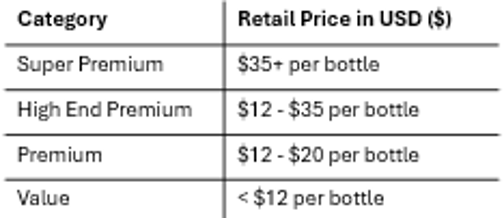
Price Categories in Liquor
For those who drink, interest in craft culture and mixology has boosted out-of-home consumption and demand for premium brands.
Social media may influence consumers to choose higher-end products to project a certain lifestyle, though research varies on this point. Mixology’s popularity has driven increased sales of premium drinks. According to DISCUS Economic Reports from 2018 and 2019, High End Premium brands saw sales grow by 830,000 cases and Super Premium by 633,000 cases between 2017 and 2018, while the Premium and Value categories declined.
During an address, Chris Swonger, CEO and President of the Distilled Spirits Council of the United States (DISCUS), stated that he believes Millennials prefer premium alcoholic beverages because Millennials "demand diverse and authentic experiences, and desire innovative and higher-end products." Millennials are looking for the same feeling of tipsiness but with local and more environmentally conscious ingredients yet fewer calories.
Consumer purchasing power is rising, shown by increasing U.S. median household incomes: $51,371 in 2012 and $61,937 in 2018 and $83,730 in 2024. Over half of states exceed the national average, with Washington D.C. and Maryland leading at $85,203 and $83,242. In metropolitan areas, San Francisco had the highest median income in 2018 at $107,898, followed by Washington D.C.
A higher median household income generally correlates with greater consumption, but not always. For instance, New Hampshire and Washington D.C. have high alcohol consumption and high median incomes, while Utah's alcohol use is low despite a relatively high-income ranking. Various factors, including state regulations, age demographics, and urbanization, influence a state's alcohol consumption.
American drinking preferences continue to evolve alongside broader cultural and economic shifts. The demand for sweeter, smoother spirits reflects changing tastes, while shot culture persists among certain age groups. Despite these trends, wine and beer remain the most popular choices nationwide, underscoring the enduring appeal of these classic beverages as the industry adapts to new consumer priorities and lifestyles.
Want to learn more? Continue reading the External Influences Affecting the Spirits Industry